Poland on the Ground: A Business‑Savvy Tour Through Europe’s Rising Powerhouse
- 11/06/2026
- Posted by: Admin
- Categories: Local Representation, Poland Market Entry, UK–Poland Trade
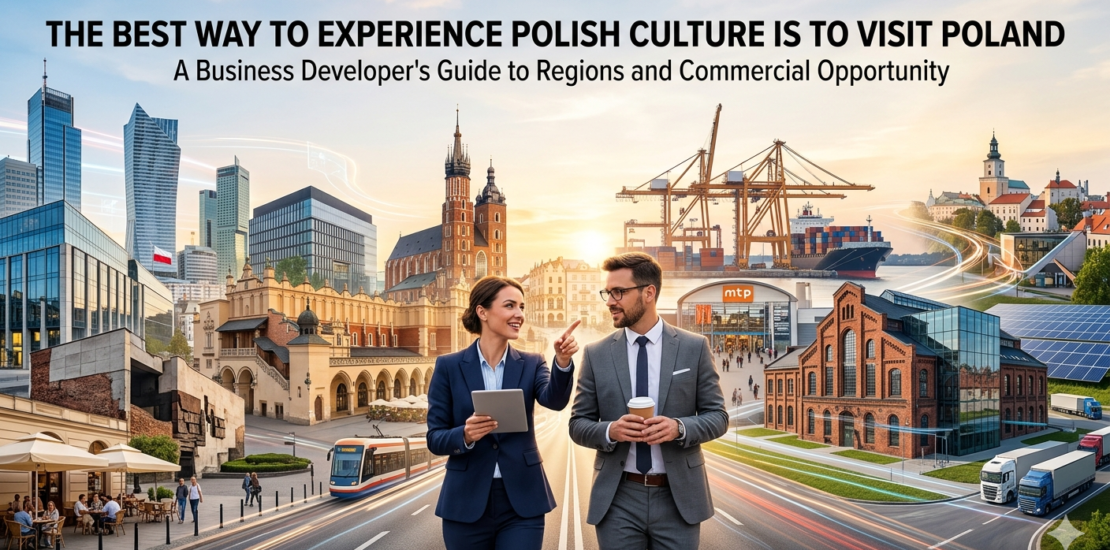
The best way to understand how Poland really works in business is to come here, walk its streets, sit in its cafés, and talk to the people building companies every day. Below is a business‑oriented tour of Poland’s most interesting cities and regions, designed for someone who wants both culture and commercial opportunity in one trip.
Why experience Poland on the ground
Poland is now one of Europe’s most dynamic mid‑sized economies, combining EU stability with fast growth and relatively low operating costs. Being here in person lets you grasp local decision‑making styles, regulatory realities, and informal networks that simply don’t show up in a Zoom call or market report.
For a business developer, this translates into three concrete advantages: faster trust‑building, better due diligence on partners and sites, and a clearer sense of which regions actually fit your sector (IT, manufacturing, logistics, services, or trade).
Warsaw: boardroom of Central Europe
Warsaw is Poland’s financial and corporate capital, home to major banks, the Warsaw Stock Exchange, and regional HQs for many multinationals. The city has a strong ecosystem of law firms, consultants, and investment agencies who specialize in helping foreign companies enter the market.
From a cultural angle, Warsaw shows you how modern Polish business grew out of a difficult 20th century: the Warsaw Rising Museum give context to resilience, risk appetite, and national memory that still shape negotiations today. Meeting a client in a glass tower in the business district and then walking through the rebuilt Old Town in the evening is a powerful contrast that helps you understand local long‑term thinking.
Kraków: talent, tech, and tradition
Kraków, the former royal capital, is now one of Europe’s key hubs for shared services, IT, and knowledge‑intensive business services. Many global companies have their back‑office, analytics, and R&D centers here, attracted by top universities and a huge pool of multilingual graduates.
Business aside, Kraków’s Main Market Square and historic Old Town make relationship‑building easy: clients expect to mix formal meetings with dinners in centuries‑old townhouses, jazz cellars, or cafés on quiet side streets. This mix of deep history and cutting‑edge services (fintech, AI, automation) makes Kraków ideal if you’re exploring nearshoring or partnership models where culture‑fit matters as much as cost.
Wrocław and Poznań: trade‑fair powerhouses
Wrocław has quietly become a major logistics and manufacturing hub, thanks to its location close to Germany and the Czech Republic and strong transport links. A growing tech and startup scene, plus several modern business parks, make it attractive for companies looking for a Western‑Poland base without Warsaw price tags.
Poznań, meanwhile, is known domestically as one of Poland’s most important trade‑fair centers, hosting sector‑specific shows spanning industry, construction, food, and consumer goods. Visiting a fair here lets you meet dozens of suppliers and potential partners in a few days, while also observing how Polish firms present themselves and what standards they expect from foreign buyers. For a business developer, building a trip around a key Poznań expo can be one of the most efficient ways to validate a market.
Gdańsk and the Baltic coast: trade, ports, and history
Gdańsk is Poland’s main Baltic port and a strategic node for logistics, shipbuilding, and energy‑related projects. The city also has symbolic weight as the birthplace of the Solidarity movement, which still shapes how many Poles think about workers’ rights, social compromise, and the role of business in society.
Walking the waterfront and the beautifully restored historic center after meetings helps you see how maritime trade, tourism, and heavy industry coexist in one compact urban area. For companies in logistics, e‑commerce, or manufacturing with global supply chains, time at the port and with local operators will give you a realistic sense of costs, bottlenecks, and upcoming infrastructure projects.
Katowice and Silesia: from coal to innovation
The Silesian region, with Katowice at its center, is transitioning from a coal‑heavy industrial area to a diversified economy based on advanced manufacturing, services, and green technologies. Large industrial zones and good highway and rail links make it attractive for automotive, electronics, and logistics investments.
From a cultural‑business perspective, Silesia is where you feel Poland’s industrial heritage most strongly: company visits often include tours of repurposed mines, industrial museums, or cultural venues built in former factories. This helps you understand the local workforce mentality, attachment to place, and how regional authorities are using EU funds to reshape the economy—all vital context if you plan long‑term operations here.
Lublin, Łódź, and emerging hubs
Beyond the “big five”, several mid‑sized cities are worth serious attention. Lublin, in eastern Poland, positions itself as a bridge towards Ukraine and other eastern markets, with universities, tech parks, and lower operating costs than Kraków or Warsaw. Łódź, once a textile center, is becoming a logistics and creative‑industries hub, helped by its central location and improved transport links.
Visiting these cities in person lets you spot opportunities that don’t yet appear in international rankings: niche tech clusters, specialized suppliers, or municipalities hungry for foreign partnership. You’ll also see a different side of Polish culture—less tourist‑oriented, more everyday—giving you a more accurate read on local consumer behavior and B2B expectations.
Using trade fairs and events strategically
Poland’s major trade‑fair centers—especially Poznań, but also Warsaw, Katowice, and others—host sector‑specific events that can anchor an entire business‑development trip. These fairs pull in exhibitors from across Central and Eastern Europe, giving you a single place to compare products, prices, and capabilities.
To get the most value, plan at least one day before or after the fair in the host city for targeted meetings and site visits. Combining a fair with local networking events, chamber of commerce meetups, or visits to industrial zones ensures you leave with both a contact list and a feel for where your business could physically fit.
Experiencing Polish business culture
Being on the ground in Poland teaches you things no report can: how long decisions really take, who actually influences them, and how relationships develop across meetings, meals, and follow‑up calls. Polish business culture tends to mix formality (titles, punctuality, structured contracts) with a strong emphasis on personal trust and recommendations, which you build faster when you’re physically present.
Using time between meetings to explore museums, neighborhoods, and local restaurants is not a distraction—it’s part of your market research. You’ll hear how people talk about work, money, and risk, and you’ll see how different generations balance tradition with a very modern, outward‑looking mindset.
Suggested business‑focused itinerary
For a first business‑development trip, many companies get good results with a one‑to‑two‑week route: start in Warsaw (finance, HQs, national agencies), then move to Kraków (services, tech), Wrocław or Poznań (trade fairs, Western‑Poland manufacturing), and finish in Gdańsk or Katowice depending on whether ports or heavy industry matter more for you. Along the way, you can add side trips to Lublin, Łódź, or smaller industrial towns aligned with your sector.
Structuring the journey this way means every city you visit has a clear commercial purpose and a distinct cultural angle, so every meeting, dinner, and site tour deepens both your network and your understanding of how business is really done in Poland.